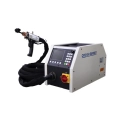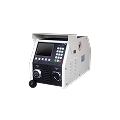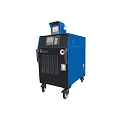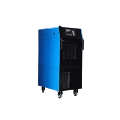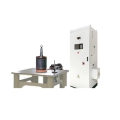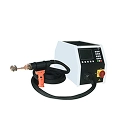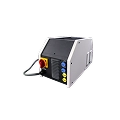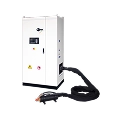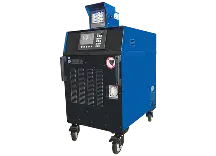





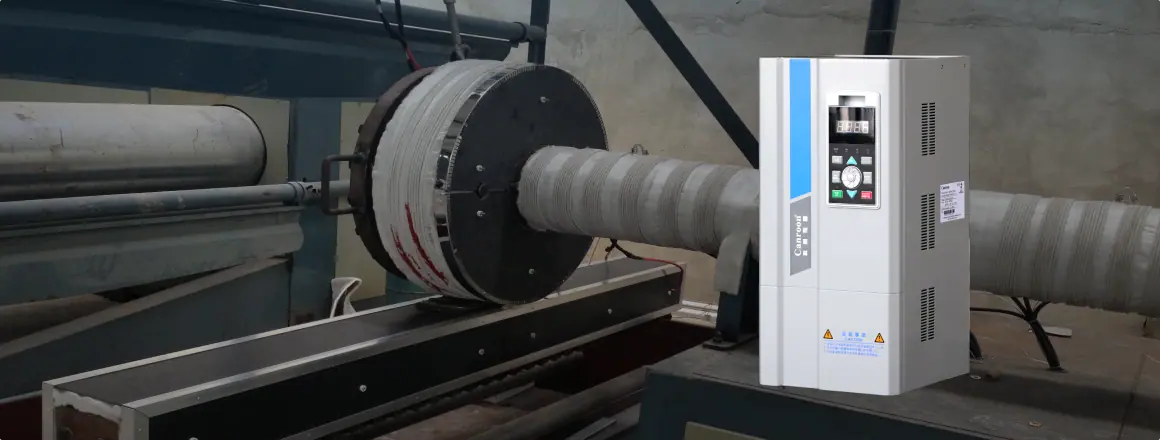
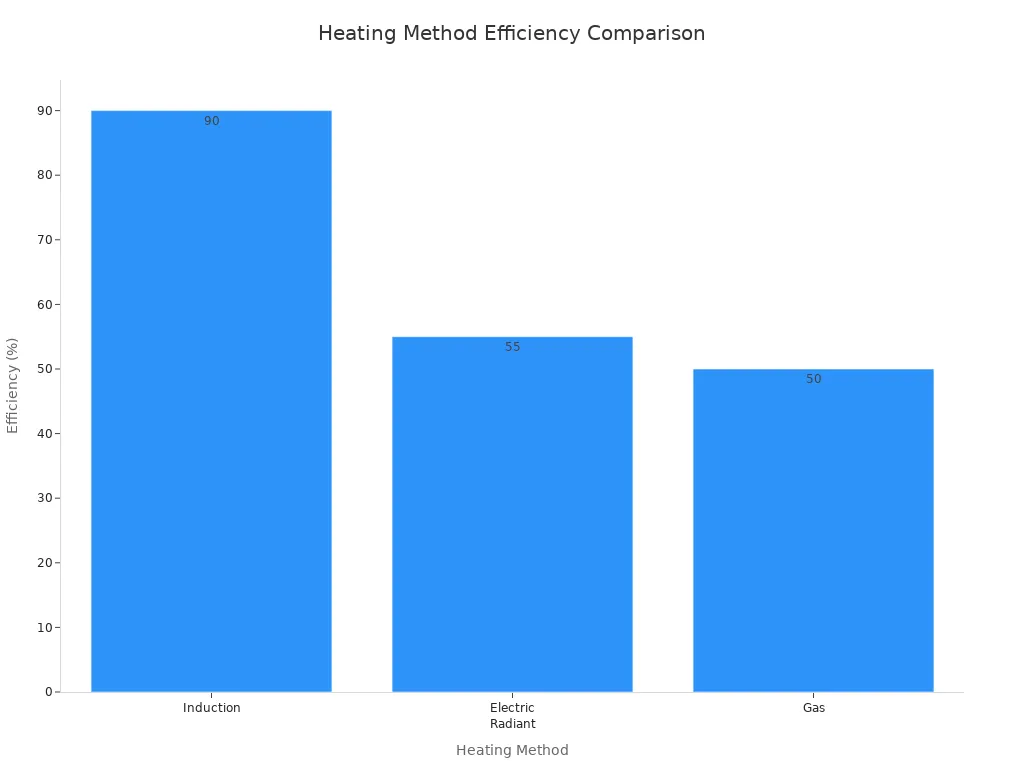
You use an induction heating power supply to turn normal electricity into high-frequency current. This current makes a strong magnetic field. The field heats metal parts fast and evenly. Induction heating is special because it is up to 90% efficient. Old ways like electric radiant or gas heating are only about half as good. Induction helps you save more energy and power.
Key Takeaways
- Induction heating power supplies change electricity into high-frequency current. This makes a strong magnetic field. The field heats metal fast and evenly.
- These systems are more than 90% efficient. They work much better than old heating methods. This helps save energy and lower costs.
- The main parts are the power supply, induction coil, and cooling system. These parts work together for steady and exact heating.
- Induction heating can be used in many ways. It is good for welding, melting, and heat treatment. Many industries use it.
- Regular maintenance and safety checks are very important. They help the induction heating system work well and stay safe.
What Is an Induction Heating Power Supply?
Definition and Function
An induction heating power supply heats metal objects without touching them. It takes electricity from the wall and changes it to high-frequency current. The current goes to a special coil. If you put a metal part inside the coil, the coil makes a strong magnetic field around it. You can control the heat by changing the power and frequency. This helps you get the right temperature for jobs like welding, hardening, or annealing.
Tip: The induction heater power supply heats parts fast and evenly. It saves energy and works better than old heating methods.
Here is a simple table showing the main parts and what they do:
| Component | Function |
|---|---|
| Power Supply | Makes high-frequency alternating current for heating. |
| Induction Coil | Sends power to make a magnetic field around the workpiece. |
| Workpiece | The item being heated, which gets hot quickly and evenly. |
Modern induction heating power supply systems use advanced electronics. You can find solid-state inverters, like IGBT or MOSFET, inside these devices. These parts help you pick the right frequency for your job. Lower frequencies heat deep inside the metal. Higher frequencies heat the surface. This lets you match the heating process to your needs and saves energy.
How It Works
The induction heater power supply changes AC power into high-frequency current. This current goes through the induction coil. The coil makes a fast-changing magnetic field. If you put a metal workpiece inside the coil, the magnetic field makes electric currents in the metal. These currents are called eddy currents.
- Eddy currents move in loops inside the metal.
- They meet resistance, which turns electricity into heat.
- The heat spreads fast and evenly through the workpiece.
You can adjust the power, frequency, and time with the induction heating power supply. This lets you control how hot the metal gets and how fast it heats up. You can use the induction heater power supply for many jobs, like welding or drying coatings.
Note: The heating effect depends on the frequency. Higher frequencies keep the heat near the surface. Lower frequencies let the heat go deeper.
Here is a list of what happens during induction heating:
- The induction heater power supply changes AC power to high-frequency current.
- The current goes through the induction coil.
- The coil makes a strong, changing magnetic field.
- The workpiece inside the coil gets eddy currents.
- The eddy currents heat the metal through resistance.
- You control the process by adjusting the induction heating power supply.
Induction heating is used for many industrial jobs. The induction heater power supply gives you precise control, which is important for jobs needing exact temperatures. You also get cleaner operation, less heat loss, and safer working conditions compared to old heating methods.
Key Components of an Induction Heater Power Supply
When you use an induction heater power supply, you need several main parts. Each part has its own job. These parts work together to make heating fast and reliable.
Power Supply Unit
The power supply unit is the main part of the induction heater power supply. It takes AC power from the wall and turns it into high-frequency current. This current is needed for induction heating. Modern units use transistor generators and microprocessor controls. These help the unit work better and give steady power. You can get over 90% efficiency with a good power supply unit. The power supply capacity shows how much energy you can give to your workpiece. If you pick the right power supply capacity, you heat parts quickly and save energy.
| Feature | Description |
|---|---|
| Modern Transistor Generators | Give you better efficiency and power control. |
| Microprocessor Control | Lets you adjust output for different jobs. |
| Feedback Mechanisms | Keep your output steady, even if conditions change. |
| Power Supply Capacity | Decides how much energy you can use for each heating process. |
RF Power Cable
The RF power cable links the power supply unit to the workhead. It carries high-frequency energy with little loss. Good cables help your induction heater power supply stay efficient. Bad cables waste energy and heat parts less. The cable’s length and quality can change your power supply capacity.
Workhead and Coil
The workhead holds the coil and other parts like capacitors. The coil makes a strong magnetic field around your workpiece. The coil’s shape is important. You pick the coil design to fit your part. Pancake coils heat flat parts. Multi-turn coils heat round parts. The coil and workhead shape change how the magnetic field heats your part. This lets you control the heating pattern and energy use. The induction heater power supply sends current to the coil, so the power supply capacity must fit the coil’s needs.
Workpiece
The workpiece is the metal part you want to heat. When you put it in the coil, it gets hot from eddy currents. The material, size, and shape of your workpiece affect how well it heats. Some metals heat up faster than others. If your workpiece is big or has a tricky shape, you may need more power supply capacity from your induction heater power supply.
| Property | Description |
|---|---|
| Material Composition | Changes how fast and evenly your part heats. |
| Geometry | Affects the distribution of heat inside the workpiece. |
| Magnetic Properties | Influence how the magnetic field interacts with the part. |
نظام التبريد
The cooling system keeps your induction heater power supply, workhead, and coil from getting too hot. Most systems use water cooling with pumps and tanks. Cool water moves through the system to take away heat. If you do not cool your system, it can get damaged and work less well. Good cooling helps you keep your power supply capacity high and your induction heating safe.
Tip: Always check your cooling water quality. Clean water stops clogs and keeps your induction heater power supply working well.
When you use all these parts together, you get a strong and efficient induction heating system. The design and power supply capacity of your induction heater power supply decide how well your system works. If you pick the right parts and take care of them, you get fast, even heating and save energy every time.
Induction Heating Applications and System Operation
How Components Work Together
Each part in an induction heating system has a job. The parts work together in a certain order. Here is how the process goes step by step:
- The power supply gets electricity from the wall. It changes it into high-frequency AC. You pick the frequency and power for your task.
- The current flows through a copper coil. Water cools the coil so it does not get too hot. The coil makes a strong and fast magnetic field.
- The workpiece sits inside the coil. The magnetic field goes into the metal. It makes eddy currents that heat the metal from inside.
- The system raises the temperature at a steady rate. Sensors watch the temperature and send information to the control panel. You can choose how long the part stays hot.
- The cooling system turns on if needed. It cools the workpiece at the right speed for good results.
Induction heating gives you quick, clean, and repeatable results. You can control the process for each job.
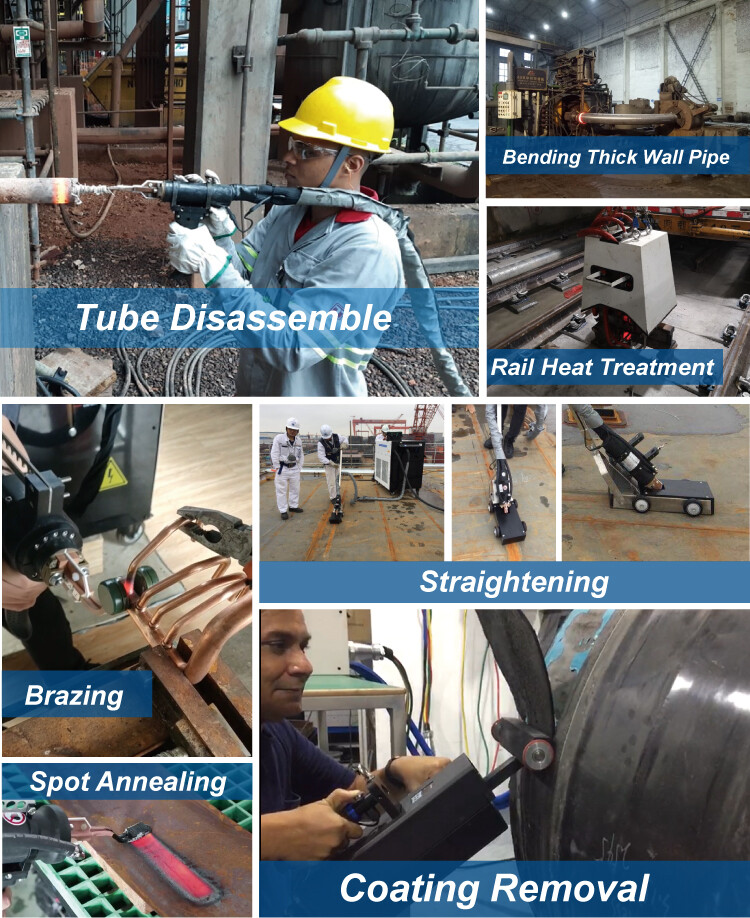
Common Induction Heating Applications
Induction heating is used in many factories and workshops. These uses help save energy and make better products. Here are some common ways people use induction heating:
- Annealing
- Bonding
- اللحام بالنحاس
- Carbide tipping
- Casting
- Melting
- Soldering
- تزوير المعادن
- Heat treatment
- Induction fluid and gas heaters
- Coating and curing
- Wire, rod, and cable heating
You can use induction heating in many different industries. The table below shows where you might see these uses:
| Industry | Description |
|---|---|
| Metal Industry | Induction is used for melting, forging, and heat treating. |
| Industrial Manufacturing | Induction heating is used for many factory processes. |
| Automotive | Induction is used for making and joining car parts. |
| Plastics Processing | Induction is used for shaping and molding plastics. |
| Electronics and Semiconductors | Induction heating is used for making small parts. |
| Consumer Appliances | Induction is used for making kitchen tools and appliances. |
| Medical Industry | Induction heating is used for making and cleaning medical devices. |
Induction heating can be used for many jobs. It works for both small and large parts. You get fast heating, less waste, and better control. Induction helps you keep up with modern manufacturing needs.
Safety and Maintenance for Induction Heating Systems
Safety Considerations
You must always think about safety when you use an induction heating system. These systems use high voltage and strong magnetic fields. If you do not follow safety rules, you can get hurt or damage your equipment. The table below shows the main safety risks you may face:
| Safety Risk | Description |
|---|---|
| Magnetic Field Exposure | You can get burns if you touch an energized coil while wearing metal. Pacemakers can be affected up to 1 meter away. |
| High-Voltage Electrical Components | Induction systems can reach over 5kV. You risk shock if you do not follow isolation steps. |
| Equipment Failures | Coil damage, wiring faults, or moisture can break safety features and lower system capacity. |
You should always check for these risks before you start. Most factories use safety standards to protect you and your team. In North America, you see rules from UL and CSA. In Europe, EN 60335-2-6 is common. Asian countries like Japan and China have their own standards. These rules focus on electrical safety, electromagnetic compatibility, and system capacity. You also need safety circuits, emergency stop buttons, and water flow checks to keep your induction system safe.
Tip: Never wear metal jewelry near an energized induction coil. Always use the emergency stop if you see a problem.
Basic Maintenance Tips
You can keep your induction heating system working well if you follow a good maintenance plan. This helps you keep high capacity and avoid breakdowns. Here are some simple steps you should follow:
- Every day, check the system before you start your shift. Clean the coil to stop carbon buildup and keep capacity high.
- Each week, clean and align the main parts. Look for loose wires or signs of wear.
- Every month, inspect the power supply for leaks or hot spots. Check the torque on all fasteners. Test the safety circuits and back up your machine settings.
- For the cooling system, flush the water loop and clean the heat exchanger. Check the pump and make sure water flows well to keep capacity steady.
- If you find a problem, turn off the power and wait for the voltage to drop. Wear protective gear. Check for coil damage, cracks, or strange smells. Fix or replace parts as needed.
You should also have a professional check your induction system every month. This keeps your system safe and your capacity at its best. If you follow these steps, you will get long life and strong performance from your induction heating power supply.
You use induction heating power supplies for fast and accurate heating. These systems help save energy in factories today. The table below shows why they are important:
| Benefit | Description |
|---|---|
| Efficiency | Quick and exact heating helps make more products. |
| Compact Size | Small units fit easily and make setups better. |
| Easy Installation | Simple setup saves time and makes work easier. |
| Versatility | You can use them for many jobs like welding or melting. |
| Energy Use | They need less energy, so you spend less money. |
| Quality | Good heating gives you better parts. |
All the parts work together to keep the system running well. The power supply, coil, capacitors, and cooling each have a job. Capacitors keep energy steady. The coil heats the metal. Cooling stops things from getting too hot. You get heat right where you need it, so the system works well. Always check safety and do maintenance to keep everything working.
- Induction heating uses a magnetic field that changes to heat metal fast and evenly.
- The system has a power supply, coil, and cooling to keep things reliable.
- Power rating and frequency decide how deep and strong the heat goes.
- You get quick heating, exact heat spots, and the same results every time.
- The system saves space and helps the environment.
Now you know how induction heating power supplies help many industries. If you stay safe and take care of the system, it will keep working well.
الأسئلة الشائعة
What is induction heating?
You use induction heating to warm metal parts without touching them. The system creates a magnetic field that makes the metal hot quickly and evenly. This method works well for many jobs in factories.
How safe is an induction heating system?
You stay safe if you follow all safety rules. Do not touch the coil when it is on. Remove metal jewelry before you start. Always check for warning signs and use emergency stops if needed.
Why does the coil need cooling?
You need to cool the coil because it gets hot during use. Water or another coolant flows through the coil. This keeps the system working well and prevents damage.
Can you control the temperature with induction heating?
You can control the temperature by adjusting the power, frequency, and time. Sensors help you watch the heat level. This gives you the right results for each job.
What metals work best with induction heating?
You get the best results with metals like steel, iron, and copper. These metals heat up fast and evenly. Some metals, like aluminum, also work but may need special settings.